Metal roofing has become one of the most popular roofing options for homeowners and commercial property owners because of its durability, energy efficiency, and long lifespan. However, before installing a metal roof, it’s important to prepare the roof deck properly. One of the most common questions homeowners ask is: What do you put down before a metal roof?
The answer depends on the type of roof, local building codes, and the condition of the existing structure. In most cases, installers place an underlayment and other protective materials beneath the metal panels to ensure long-term performance and protection.
Why Is Preparation Important Before Installing a Metal Roof?
A metal roof is only as good as the surface beneath it. Proper preparation helps:
- Prevent water infiltration
- Reduce condensation issues
- Improve energy efficiency
- Minimize noise from rain and hail
- Extend the lifespan of the roofing system
- Protect the roof deck from moisture damage
Skipping essential layers beneath a metal roof can lead to leaks, rust, mold growth, and costly repairs.
Roof Deck Inspection
Before any materials are installed, the roof deck should be thoroughly inspected. The decking must be:
- Structurally sound
- Free of rot or water damage
- Properly secured
- Smooth and level
Damaged plywood or OSB (oriented strand board) should be replaced before moving forward with the installation.
Underlayment: The Most Important Layer
The most common material installed beneath a metal roof is roofing underlayment. This protective layer acts as a secondary moisture barrier between the roof deck and the metal panels.
Synthetic Underlayment
Synthetic underlayment is widely considered the best choice for modern metal roofs.
Benefits include:
- Lightweight and durable
- Tear-resistant
- Water-resistant
- UV-resistant
- Longer lifespan than felt paper
Many professional roofers prefer synthetic underlayment because it provides superior protection during and after installation.
Felt Underlayment
Traditional asphalt-saturated felt, often called roofing felt or tar paper, is another option.
Advantages include:
- Lower cost
- Widely available
- Effective moisture protection
However, felt is generally less durable than synthetic underlayment and may deteriorate more quickly over time.
Ice and Water Shield
In colder climates or areas prone to heavy rain, installers often apply an ice and water shield before laying the underlayment.
This self-adhering membrane is typically installed:
- Along roof edges
- In valleys
- Around chimneys
- Near skylights
- Around roof penetrations
The membrane creates a watertight seal that helps prevent leaks caused by ice dams and wind-driven rain.
Furring Strips or Battens
Some metal roofing systems require furring strips, also known as battens.
These are narrow strips of wood installed over the underlayment before the metal panels are attached.
Benefits of battens include:
- Improved ventilation
- Better moisture management
- Increased energy efficiency
- More secure panel attachment
Not all metal roofing systems require battens, so installation requirements should always follow the manufacturer’s guidelines.
Vapor Barrier
In humid climates or buildings with high indoor moisture levels, a vapor barrier may be installed beneath the roof system.
A vapor barrier helps:
- Control condensation
- Protect insulation
- Prevent mold growth
- Improve indoor comfort
Condensation can be a major issue with metal roofs if proper moisture-control measures are not used.
Insulation Beneath a Metal Roof
Many homeowners choose to install insulation when replacing their roof.
Common options include:
Rigid Foam Insulation
Rigid foam boards provide excellent thermal resistance and can help improve energy efficiency.
Spray Foam Insulation
Spray foam creates an airtight seal and helps reduce energy loss.
Fiberglass Insulation
Fiberglass batts remain a cost-effective insulation option for many homes.
The type of insulation used depends on the building design and local climate conditions.
Can You Install a Metal Roof Over Existing Shingles?
In some cases, yes. Many building codes allow metal roofing to be installed over a single layer of existing asphalt shingles.
However, installers often place:
- Synthetic underlayment
- Slip sheets
- Furring strips
between the old shingles and the new metal roof.
This helps create a smoother surface and reduces the risk of moisture-related problems.
Before installing over existing shingles, the roof structure should be evaluated to ensure it can support the additional weight.
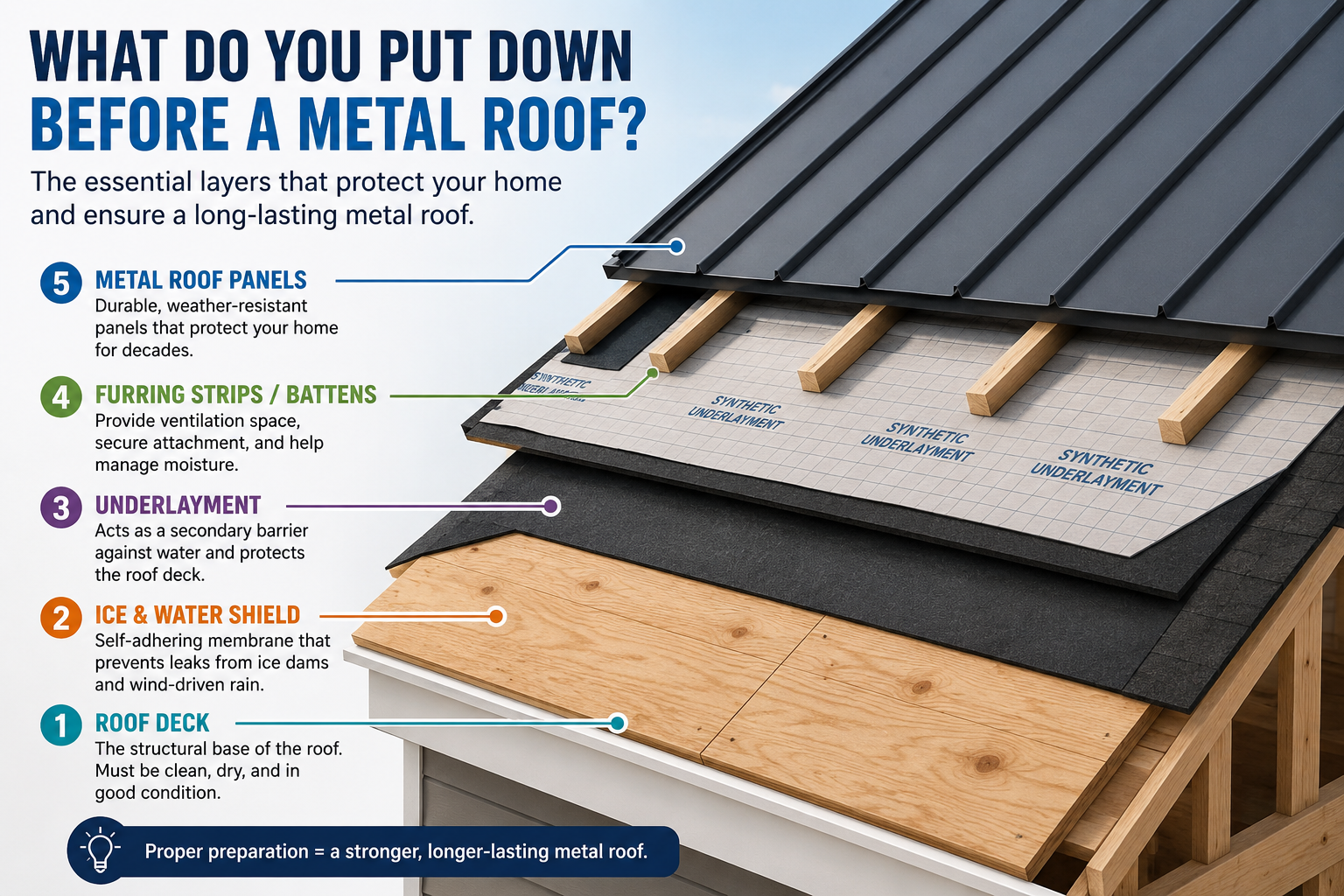
Typical Installation Layers for a Metal Roof
A standard metal roof installation often includes the following layers:
- Roof deck (plywood or OSB)
- Ice and water shield (if needed)
- Synthetic or felt underlayment
- Furring strips or battens (if required)
- Metal roofing panels
Each layer serves a specific purpose in protecting the building and maximizing the lifespan of the roof.
Common Mistakes to Avoid
When preparing for a metal roof installation, avoid these common errors:
Skipping Underlayment
Even though metal panels are water-resistant, underlayment provides critical backup protection against leaks.
Ignoring Ventilation
Poor ventilation can lead to condensation buildup and premature roof deterioration.
Installing Over Damaged Decking
Rotten or weak decking should always be repaired before installation.
Using Incorrect Fasteners
Metal roofing systems require specialized fasteners designed to prevent leaks and corrosion.
Not Following Manufacturer Guidelines
Every metal roofing system has unique installation requirements that should be followed carefully.
How Long Will a Properly Installed Metal Roof Last?
When installed over the correct materials, a metal roof can last 40 to 70 years or more. High-quality underlayment, proper ventilation, and professional installation all contribute to maximizing the roof’s lifespan.
Regular inspections and maintenance can further extend its performance and help prevent minor issues from becoming major problems.
Final Thoughts
Before installing a metal roof, it’s essential to create a strong, moisture-resistant foundation. In most cases, homeowners should install a high-quality synthetic underlayment over a sound roof deck. Depending on the climate and roofing system, additional materials such as ice and water shields, vapor barriers, insulation, or battens may also be necessary.
By using the right layers beneath your metal roof, you can improve durability, energy efficiency, weather resistance, and overall performance for decades to come.